Skip to content

EMEA Technology | CODESYS System Partner

EMEA Technology CODESYS

CONTROL, BEYOND HARDWARE.

Build hardware-independent, flexible and scalable automation solutions with CODESYS.

As an official CODESYS System Partner in Türkiye, EMEA Technology provides end-to-end engineering, technical support and licensing services for CODESYS-based automation solutions.

SAME ENGINEERING. MORE POSSIBILITIES.

  • More Flexible
    Architecture
  • Future-Ready
    Investment
  • Local Expertise
    Global Strength

Independent System Partner

CODE THE SYSTEM CONTROL THE MACHINE

EMEA Technology is an independent engineering company working within the CODESYS System Partner programme. Below, each side’s part of the work is set out separately.

Owner of the platform

CODESYS GmbH

  • Development of the engineering environment, runtime and libraries
  • Release management and official product documentation
  • Defining the licensing model and trademark use

CODESYS® is a registered trademark, used on this site in a descriptive sense only.

The company delivering the service

EMEA Technology

  • Designing a control architecture specific to your machine
  • Application development, motion profiles and the operator interface
  • Licence supply, field commissioning and engineer training

It is an independent engineering and system integration firm; it serves as the brand owner's Official System Partner in Türkiye.

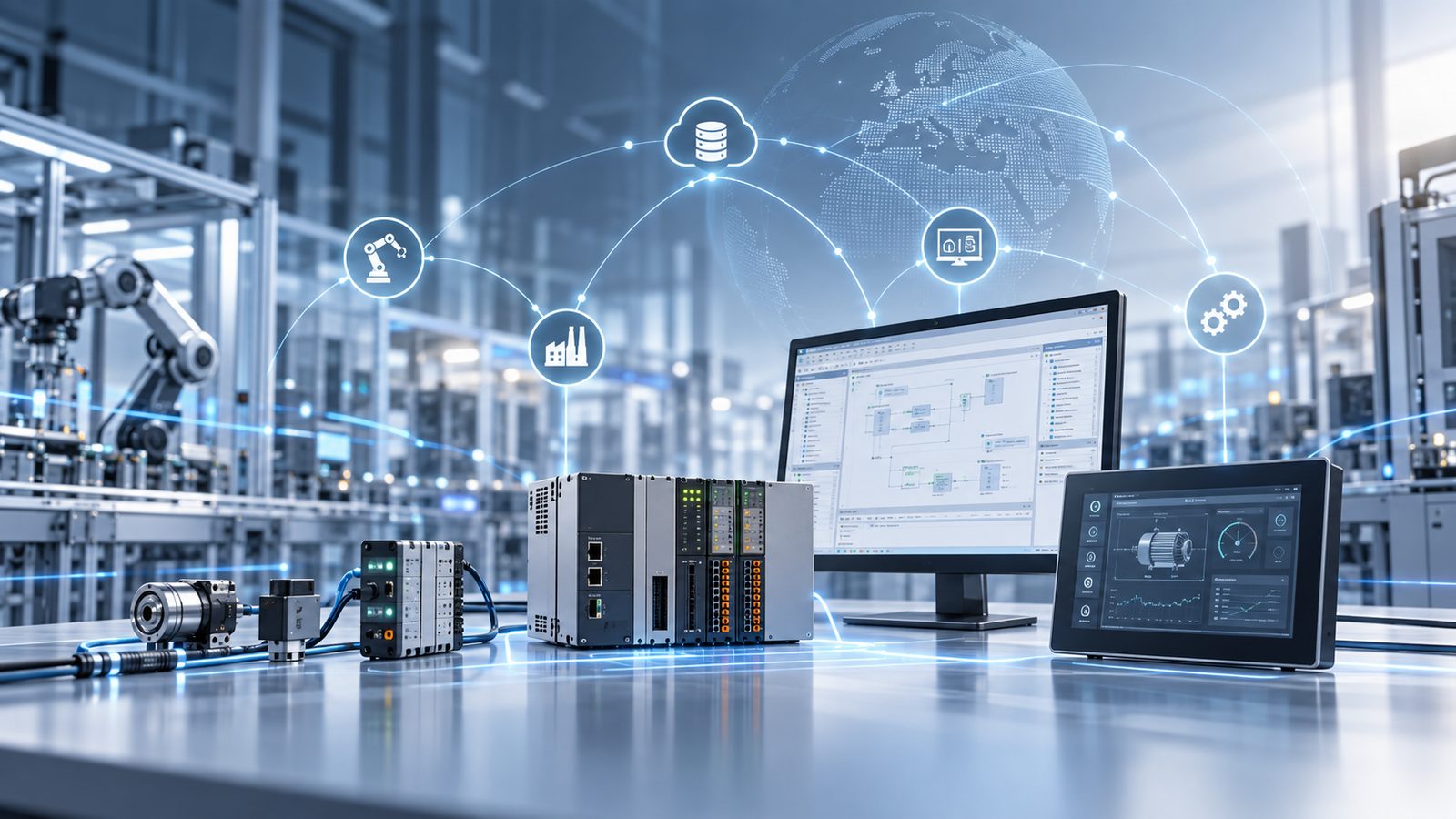
An industrial controller, operator panel and engineering screen side by side

01 Architecture

Logic, motion and interface on one controller

One project instead of a separate motion card, separate HMI software and the data-exchange layer between them: one cycle, one variable pool.

Explore the platform

02 The field

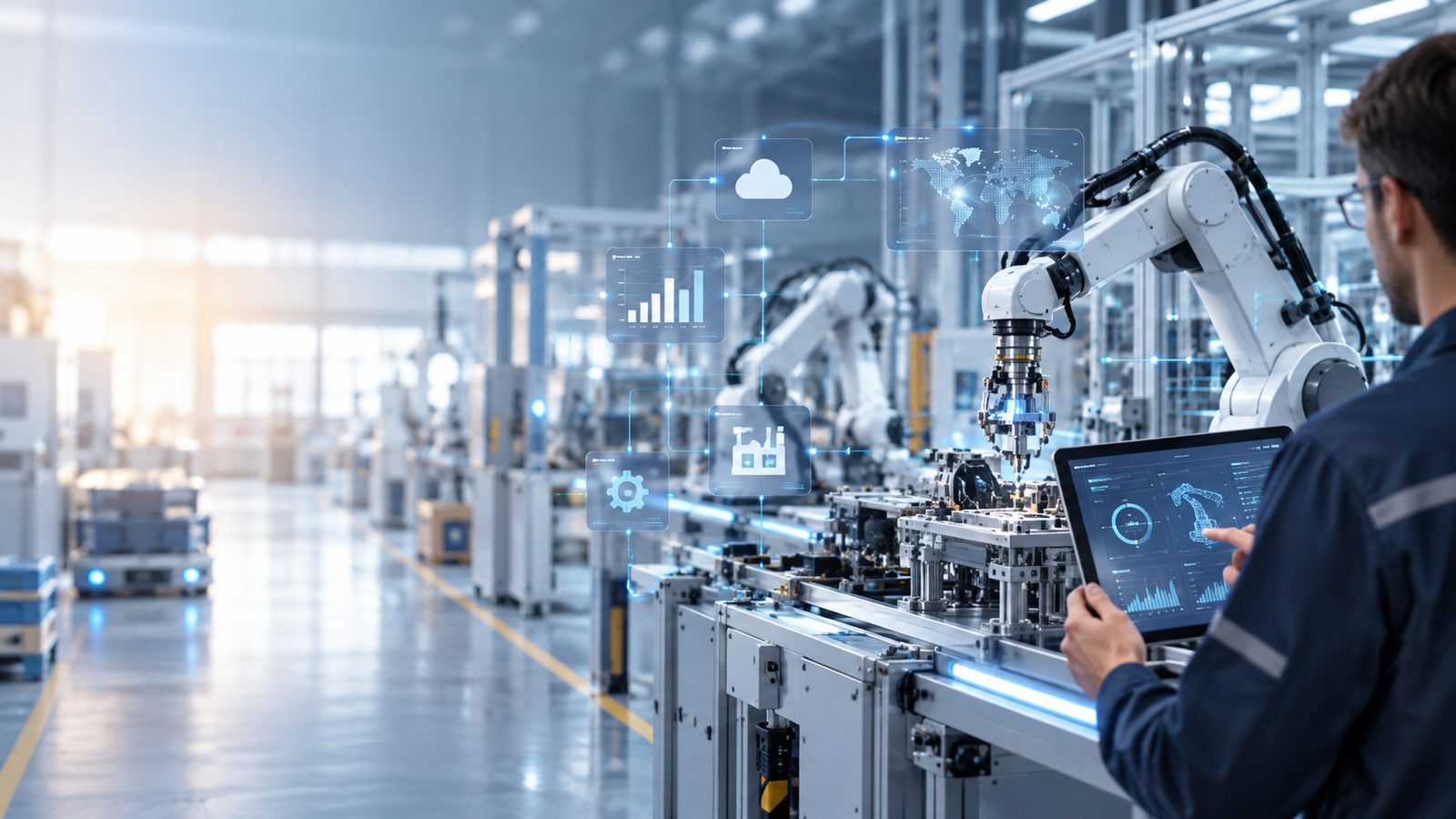
Commissioning runs on measurement, not guesswork

Cycle jitter, following error and torque current are documented with recordings; the acceptance criterion is written against the worst cycle, not the average.

How we work

03 Engineering

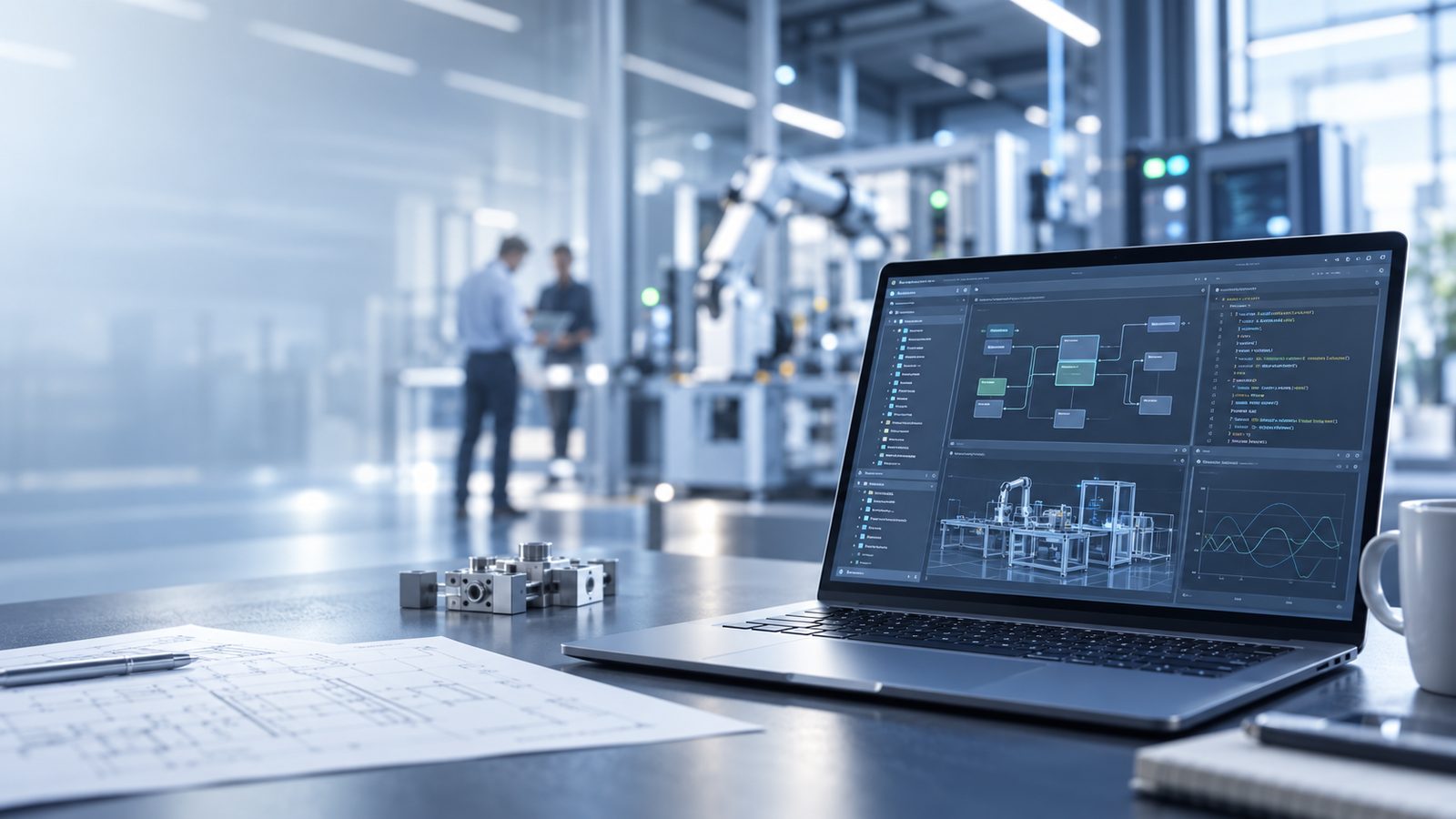
A project starts at the desk and ends in the field

Library structure, version comparison and simulation: what will work, and how, is written down before anyone goes to site.

The development environment

CODESYS Platform

CODESYS is not one program but a system of six layers

Working out which of these layers your project actually needs is the first job. Buying a package you will not use costs money; standing still in the field because one is missing costs more.

01

Engineering

All six IEC 61131-3 languages in one project tree. Library management, version comparison and online debugging run from the same interface.

Explore
02

Control Runtime

The layer that executes your application on an industrial PC, an embedded board or a third-party controller. Change the hardware and the application code stays the same.

Explore
03

SoftMotion, CNC & Robotics

From single-axis positioning to cam synchronisation, from G-code interpretation to delta and SCARA kinematics — motion in the same cycle as the logic task.

Explore
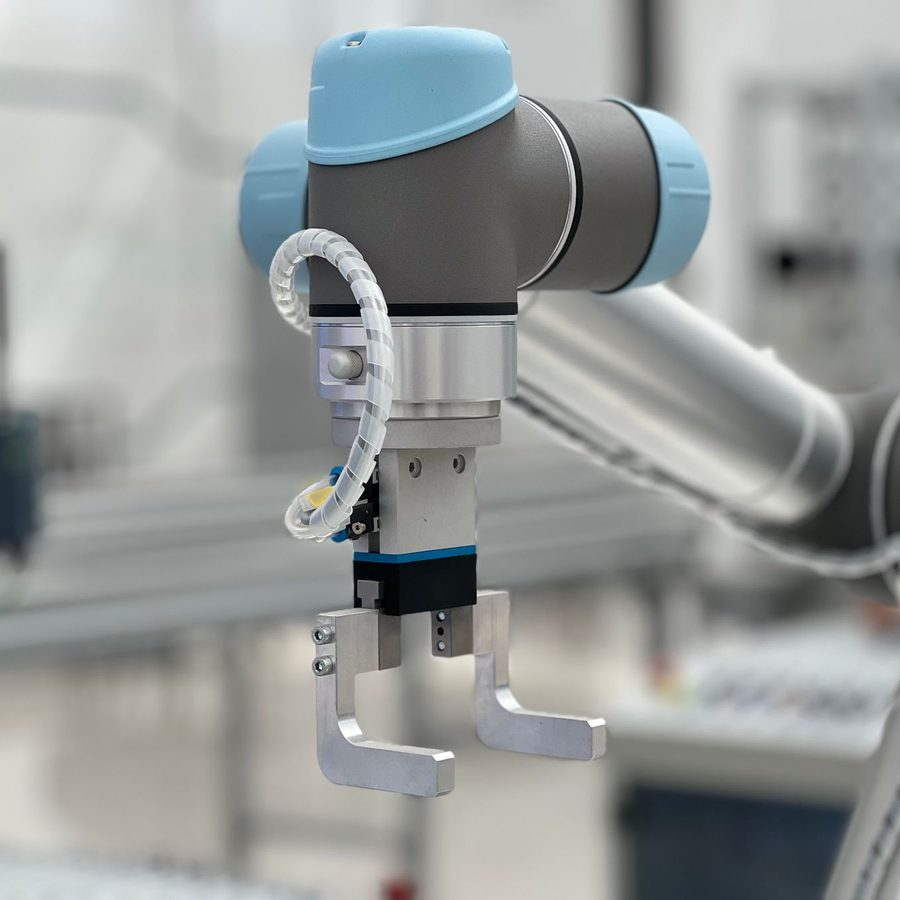
A servo-driven gripper picking a part under closed-loop position control
Field
04

Fieldbus & Communication

EtherCAT, PROFINET, EtherNet/IP, CANopen and Modbus stacks are set up in the configurator, and OPC UA carries data to the layer above.

Explore
05

Visualization

The operator screen is designed inside the control project and published from one source to panel, browser and mobile. There is no separate tag table to maintain.

Explore
06

Licensing

A licence plan broken down item by item according to runtime class, motion level and client count — delivered as a dongle or a software container.

Explore
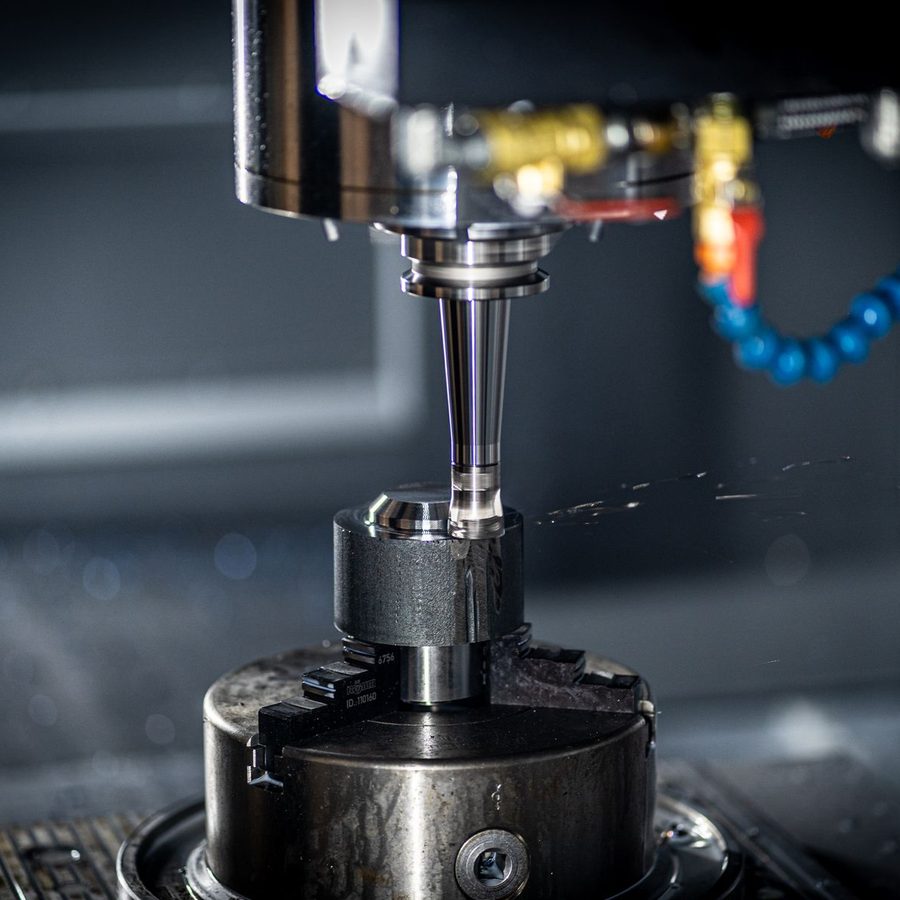
A cutting tool advancing at synchronised feed rate under coolant
Machining

Why this approach

Hardware independence proves itself in the field, not on paper

In the classic approach the hardware and the software are bought in the same box. When supply dries up or capacity grows, it is not only the box that changes — part of the program is rewritten too. Tie the control logic to a standard and that dependency breaks.

  • Supply flexibility When the controller brand changes, it is the device configuration that is rebuilt — not the application code.
  • One cycle, one system Because logic, motion and visualization live in one project, the data-exchange layer between systems and the timing gap that comes with it are largely no longer needed.
  • Scalable capacity When the axis count grows, raising the processor class is usually enough — you rarely need to move up a hardware model.
  • Code you can hand over The library structure and the source stay with the machine owner, so maintenance never depends on a single supplier.

None of this means every machine needs PC-based control. On a line that only does logic, a leaner configuration is often the right answer. The axis list and the cycle-time target decide.

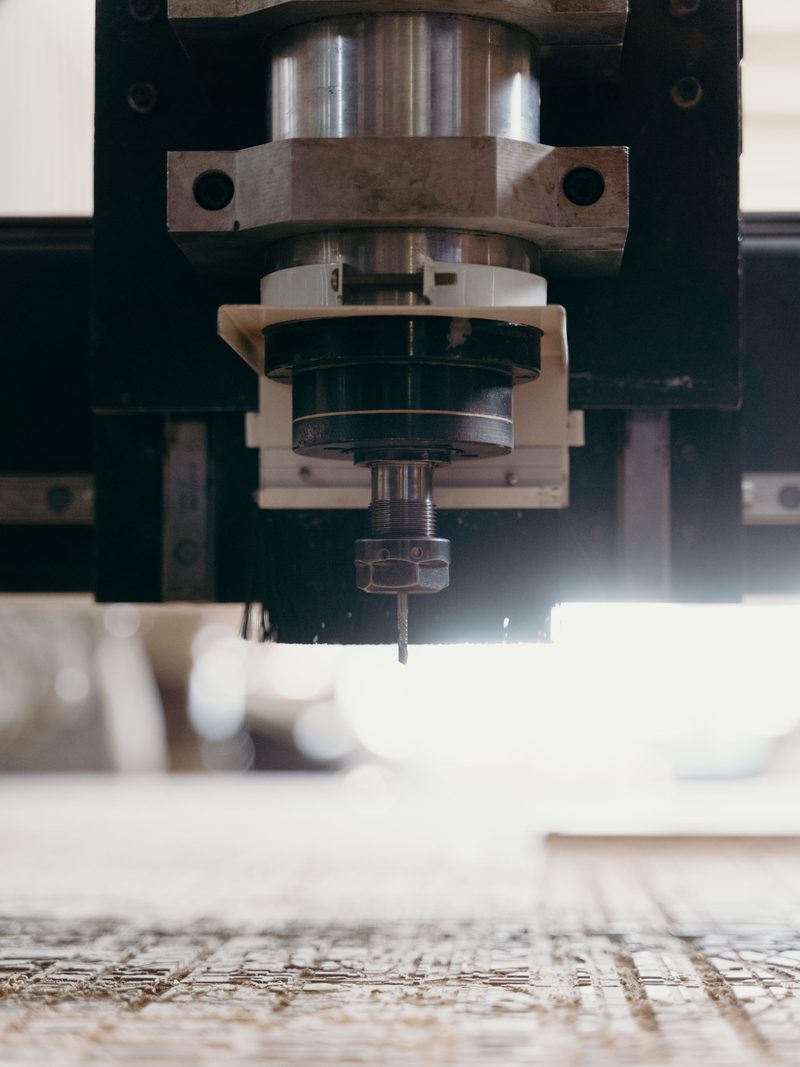
A cutting tool advancing into the material under closed-loop position control
The load change at the moment of cut shows up as error at the position controller. Torque feed-forward absorbs it before it forms.

Architecture

Logic, motion and measurement on one controller

Field devices update on the same line and the same clock, which largely removes the need for a data-exchange layer between systems and the timing gap that comes with it.

Industrial PC CODESYS Control Runtime EtherCAT · 250 µs cycle · distributed clock Servo Axis 1 Servo Axis 2 Input / Output Digital module Measurement Encoder
Figure 1 — The servo drives, the input-output module and the measuring encoder all sit on the same EtherCAT line and run in the same cycle. The entire control system is built on one controller.

Quick configuration

Which package does your machine need?

Five questions. The result is not a firm quote — it is a starting frame that shows where the conversation begins.

01 Will industrial communication be used in the application?

You can tick more than one option.

02 Is there axis control in the application?

Position or speed control with servo or stepper drives.

03 Is there CNC, group-axis or robot control in the application?

You can tick more than one option; each one asks for a quantity.

04 Will OPC UA communication be used in the application?

Data exchange with a higher-level system such as SCADA, MES or ERP.

05 Will CODESYS Visualization be used in the application?

Operator screens on the machine panel or in a browser.

Starting frame

  • Runtime—
  • Industrial communication—
  • Motion package—
  • OPC UA—
  • Visualization—

—

Get a quote for this configuration

How we work

Four steps, driven by measurement not guesswork

Every step has a concrete deliverable. What will work, and how, is written down before anyone goes to site.

Technical discovery

We establish axis count, motion type, fieldbus and what is expected of the operator interface.

Architecture and licence plan

Runtime class, motion package and visualization licence are sized for the machine.

Application development

Control logic, motion profiles and screen flow are built on a versioned library structure.

Field commissioning

Tuning is done from trace recordings, then operator training and handover documentation are completed.

Frequently asked

What people ask before starting a project

Is CODESYS a PLC brand?

No. CODESYS is a software platform for developing control applications to the IEC 61131-3 standard. The same project can run on controllers from different manufacturers that support the runtime, so your hardware choice does not lock in your software.

Where does EMEA Technology fit in?

Across the whole chain: licence supply, architecture design, application development and field commissioning. We put down in writing what the machine has to do, build the leanest CODESYS configuration that achieves it, and hand the machine over running.

Can I migrate an existing machine to CODESYS?

The logic structure can be carried over; vendor-specific function blocks and the hardware configuration are rebuilt. We start by producing a functional analysis of the existing program, map the library equivalents and make the risks visible before any work starts.

How is the licence cost determined?

It is driven by the runtime class, the motion control level and the number of visualization clients. Send us your axis list and we will set out in writing which items you need and why — we do not propose packages you will not use.

Which controller hardware does it run on?

Industrial PCs, embedded boards and third-party controllers that support the runtime. What decides the hardware is not the brand but the processor class, real-time kernel support and the fieldbus interface. Your axis list and target cycle time drive that choice directly.

How long does commissioning take?

From a few days on a logic-heavy line to a few weeks on a multi-axis synchronised machine. What sets the duration is not the amount of code but the number of variables in the field: mechanical tolerances, drive tuning and material behaviour. That is why we work from measurements.

How are software updates applied in the field?

The application is downloaded to the runtime over the network; there is no need to open the cabinet. Versions are tagged in the library structure, so you always know which release is running on which machine and rolling back takes minutes.

Are remote access and data collection possible?

Yes. The operator screen can be opened in a browser and production data can be pushed upstream over OPC UA. Access control and network segmentation are planned at the start of the project; we do not recommend leaving the machine directly exposed to the internet.

Do you train our team?

Yes. We run a training programme covering everything from IEC 61131-3 fundamentals to motion control and visualization, either in our training room or at your own site. See the Training Request page for details and pre-registration.

This site uses cookies

Strictly necessary cookies are required for the site to work. Functional, analytics and marketing cookies are added to the page only if you allow them. Cookie policy · Privacy notice

Settings